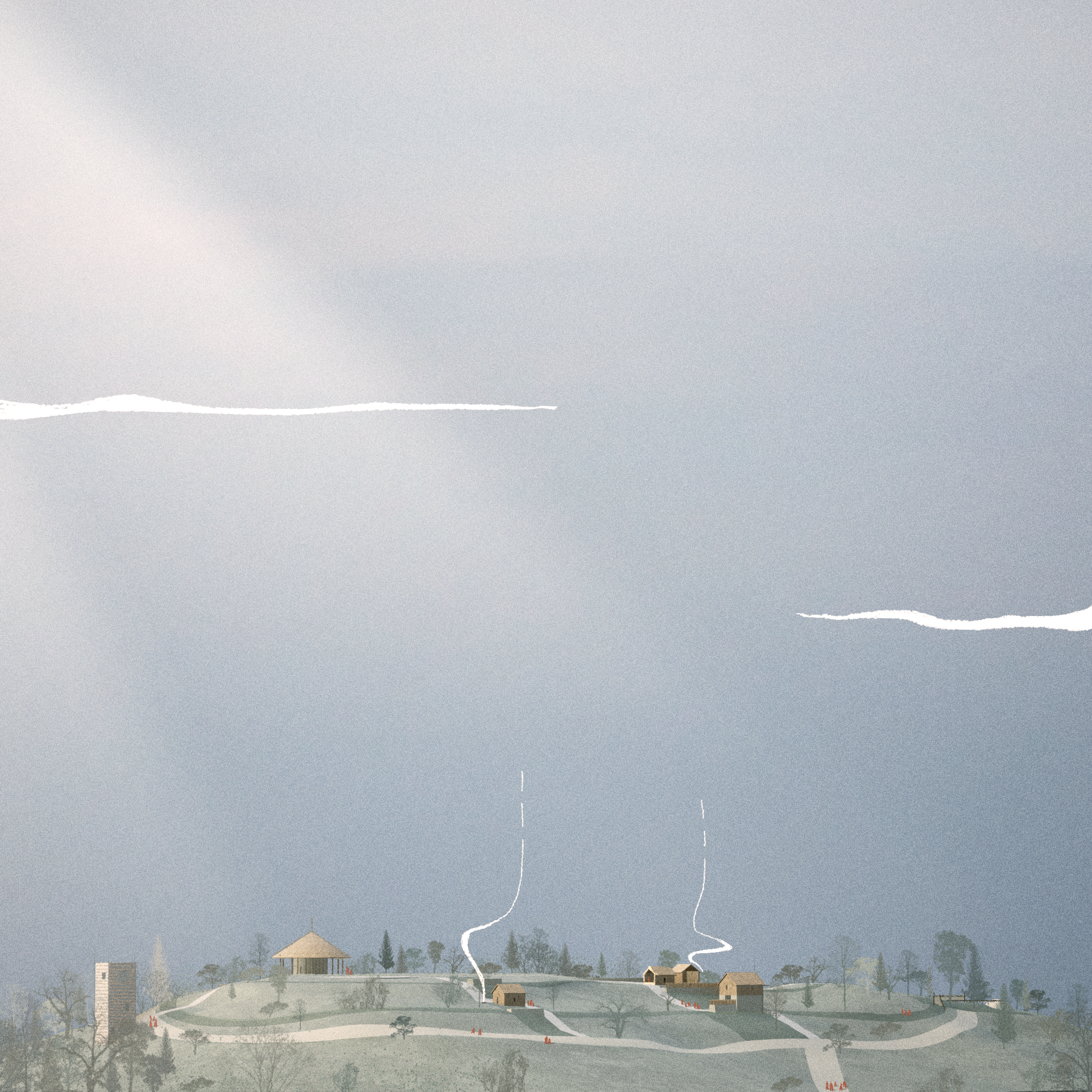

The Dacian fortified settlement of Cugir Cetățuia
Client: The Municipality of Cugir
Location: Cugir, Alba
Years: 2025-present
Project team: Alexandru Sabău, Patricia Simedru, Adrian Bucin, Ioana Sabău
Historic study: Miklós Köllő, Alexandru Sabău
Archeologists: Aurel Rustoiu
Status: in progress
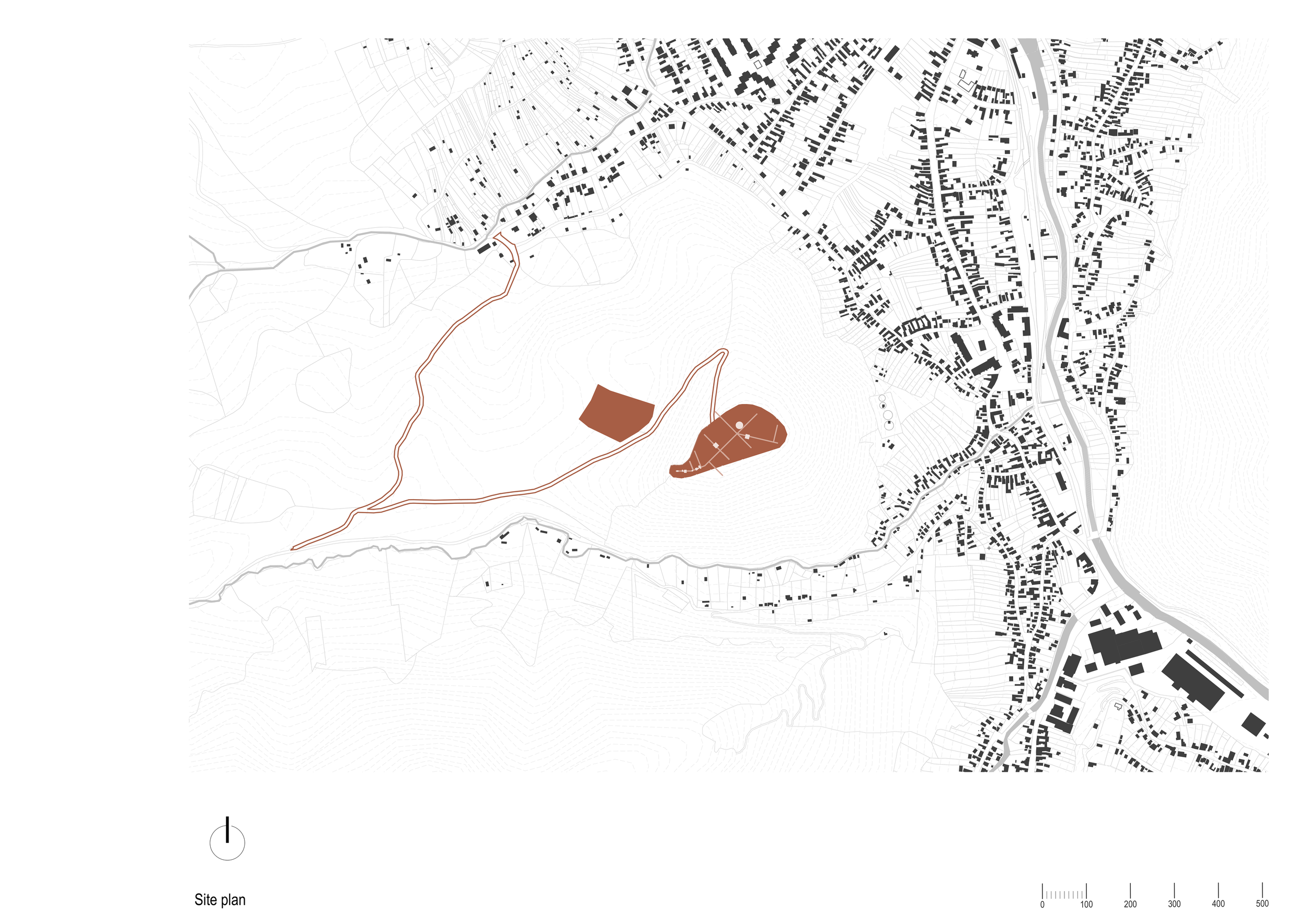
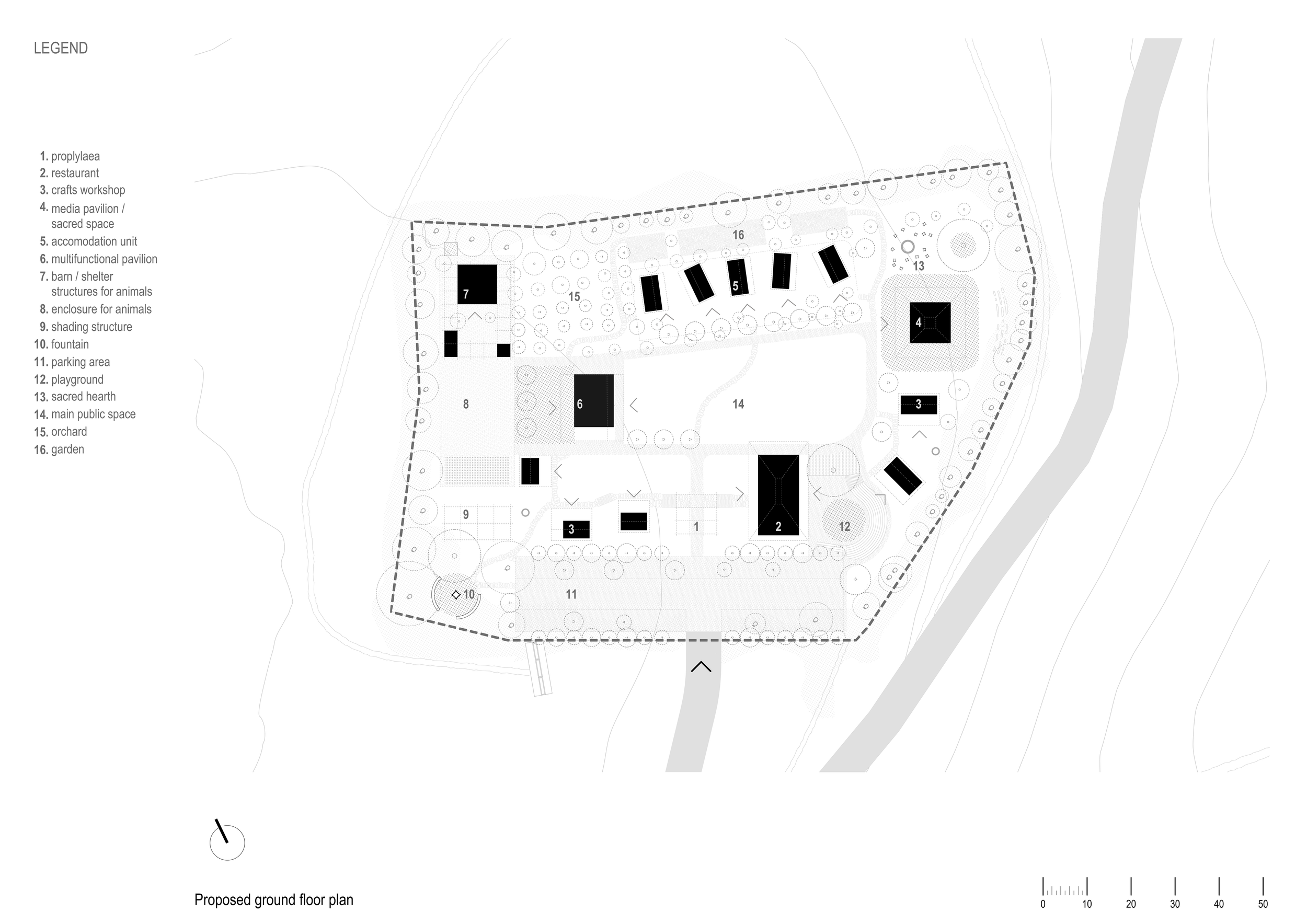
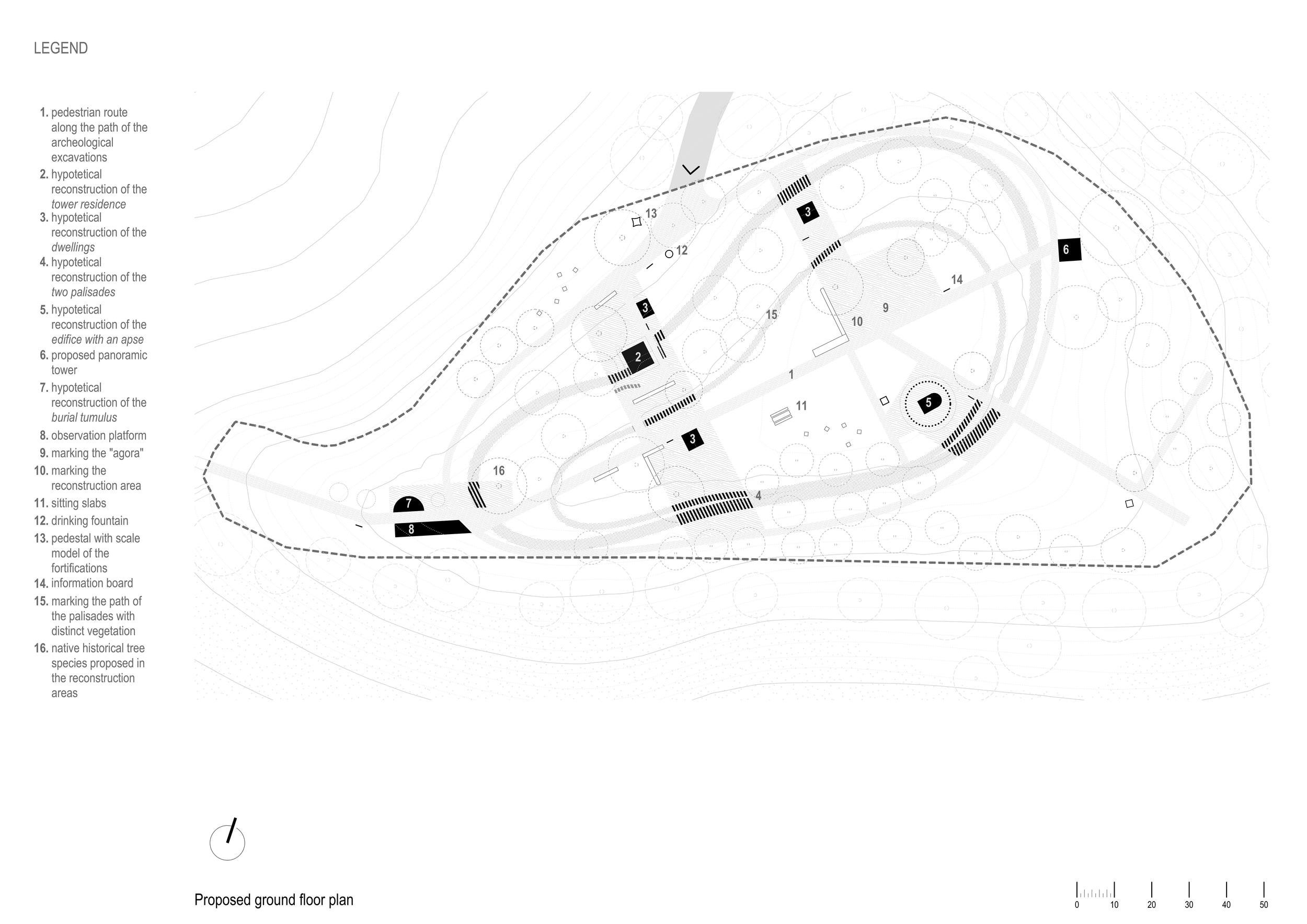
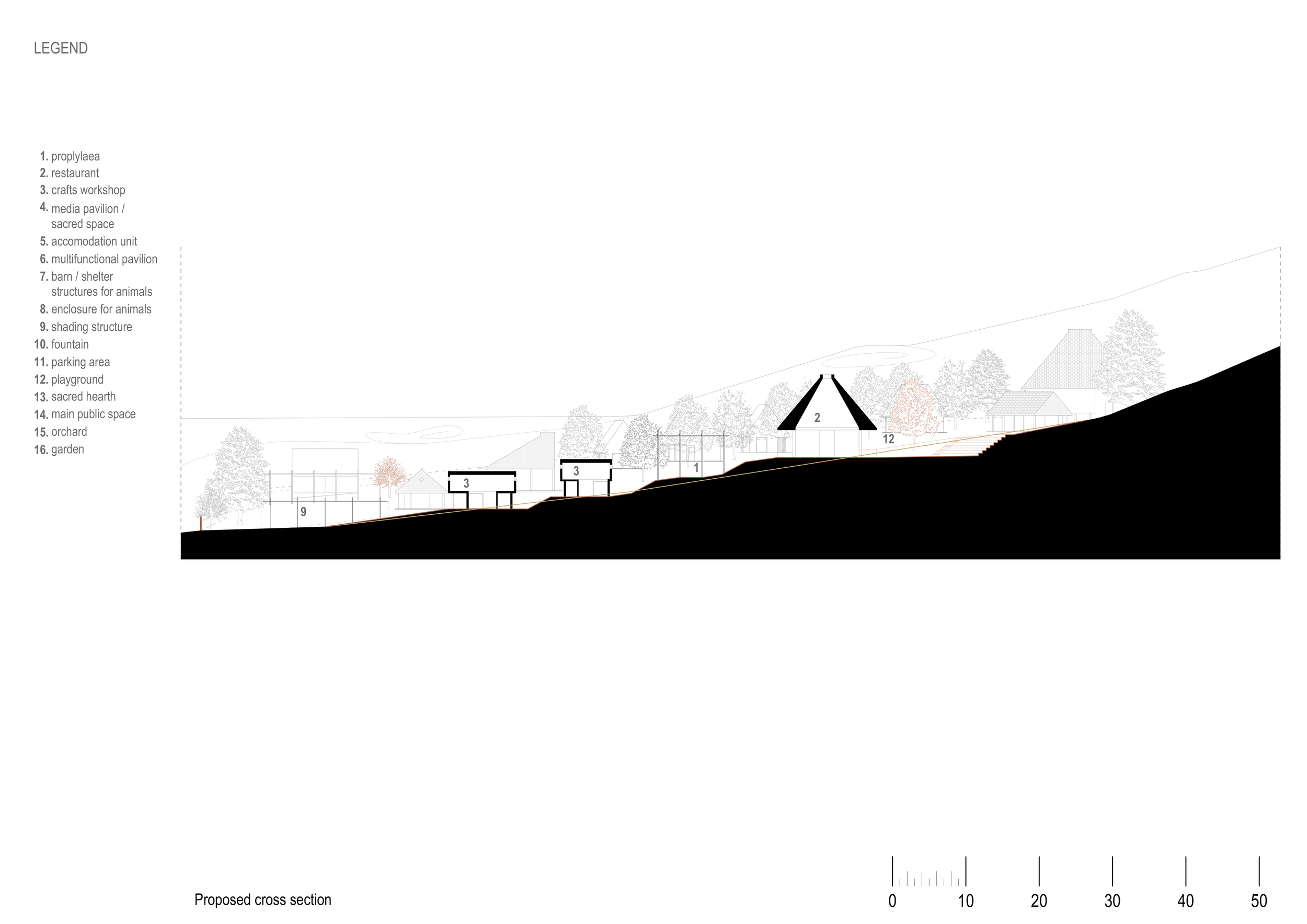
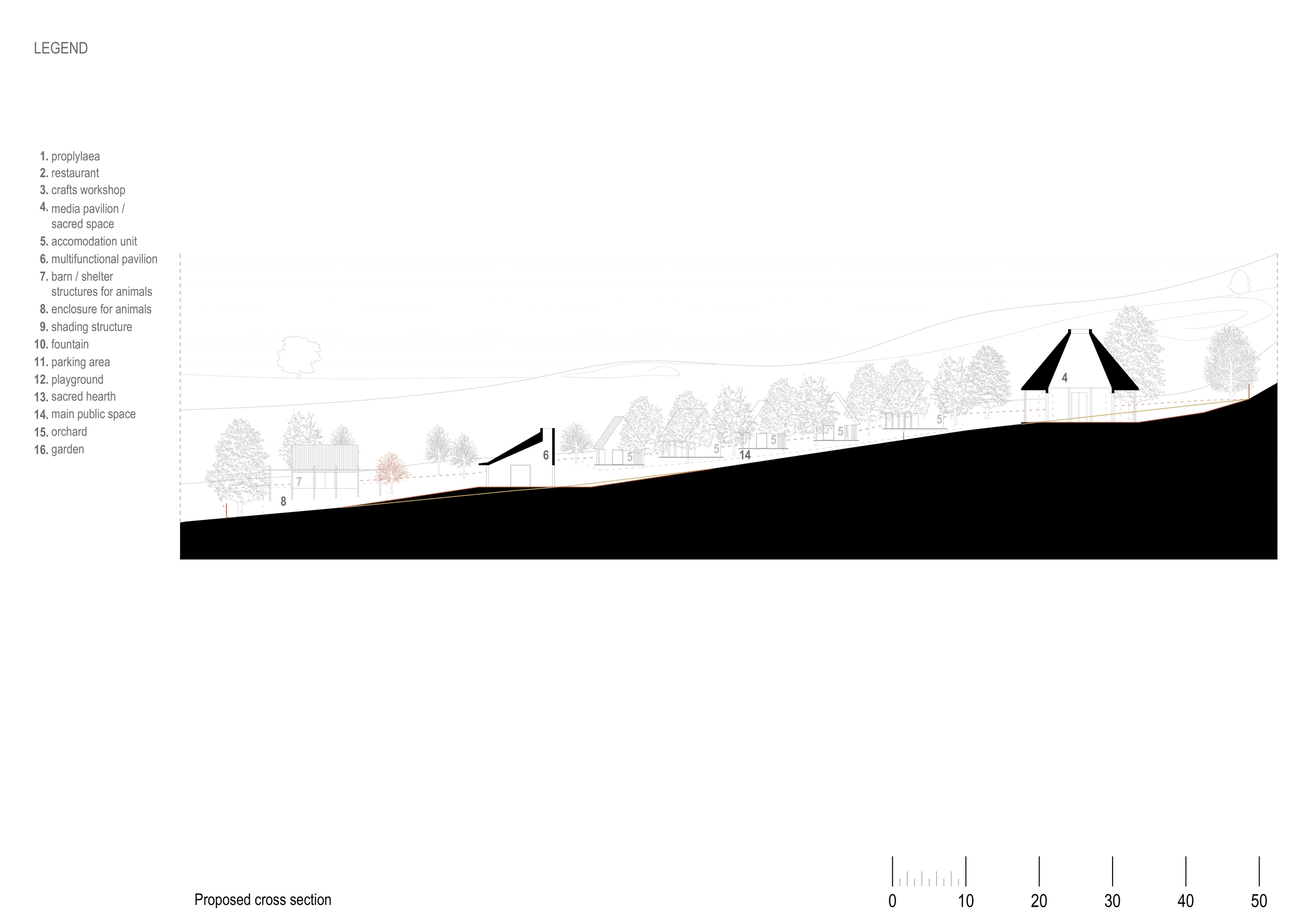
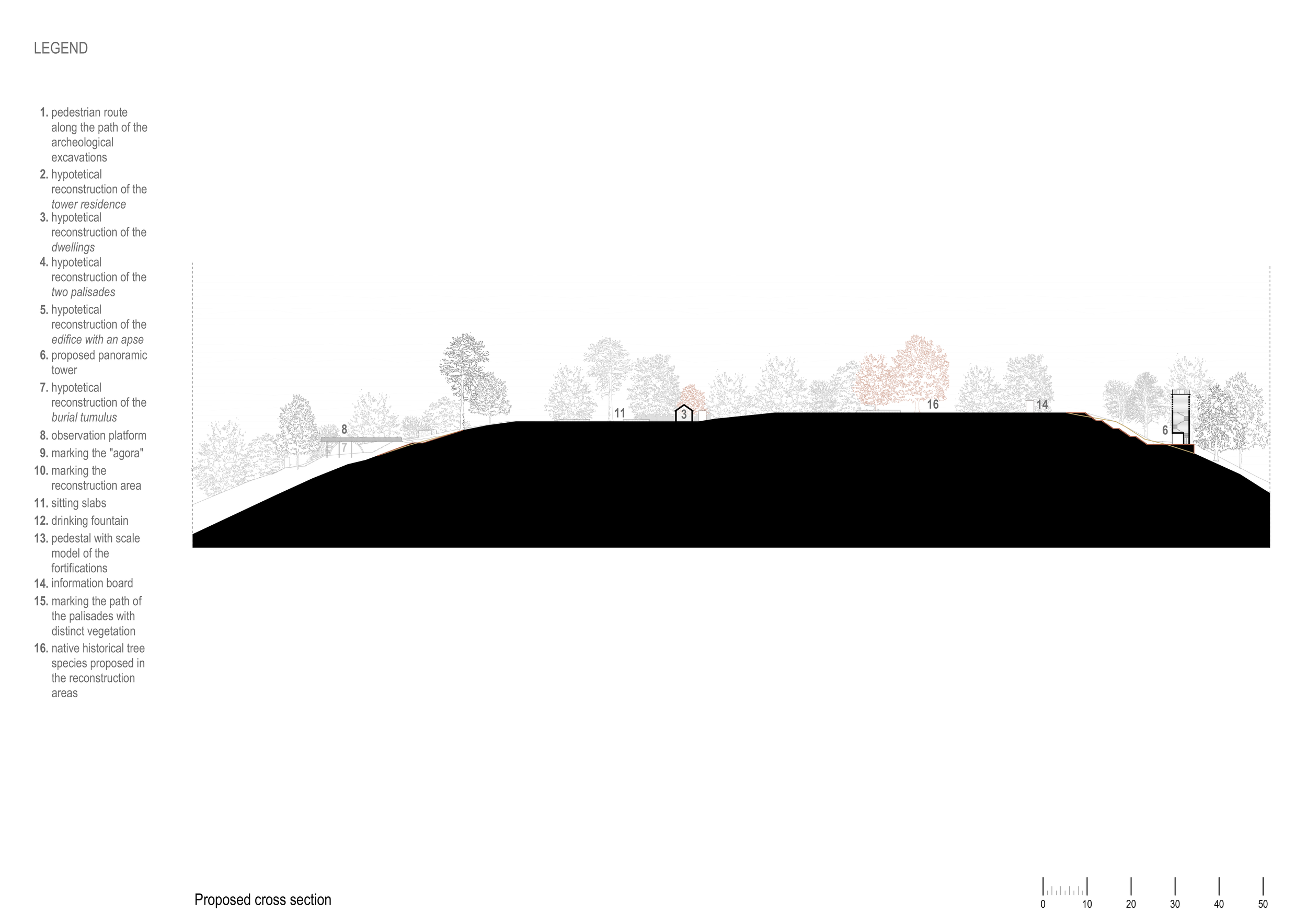
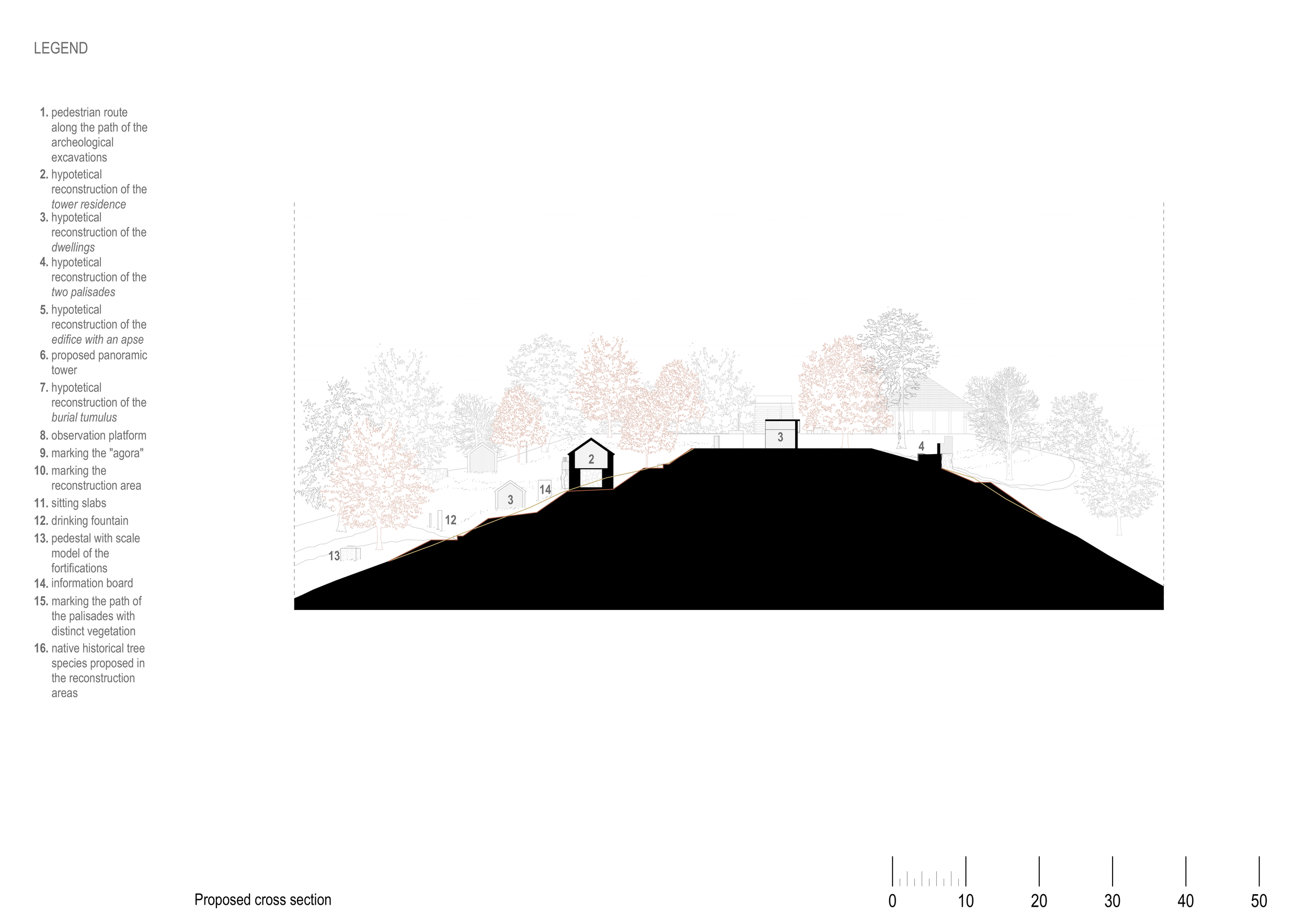
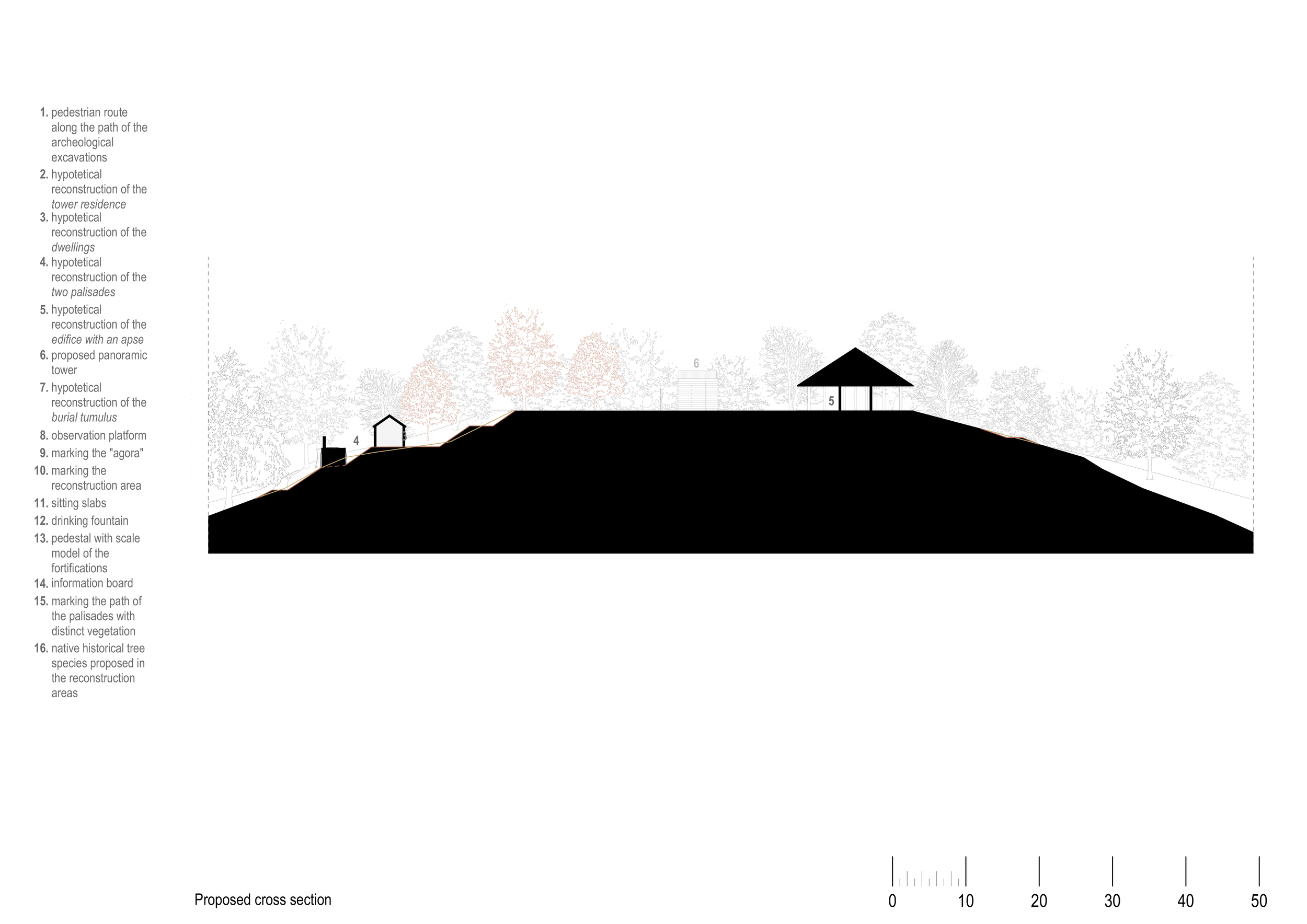
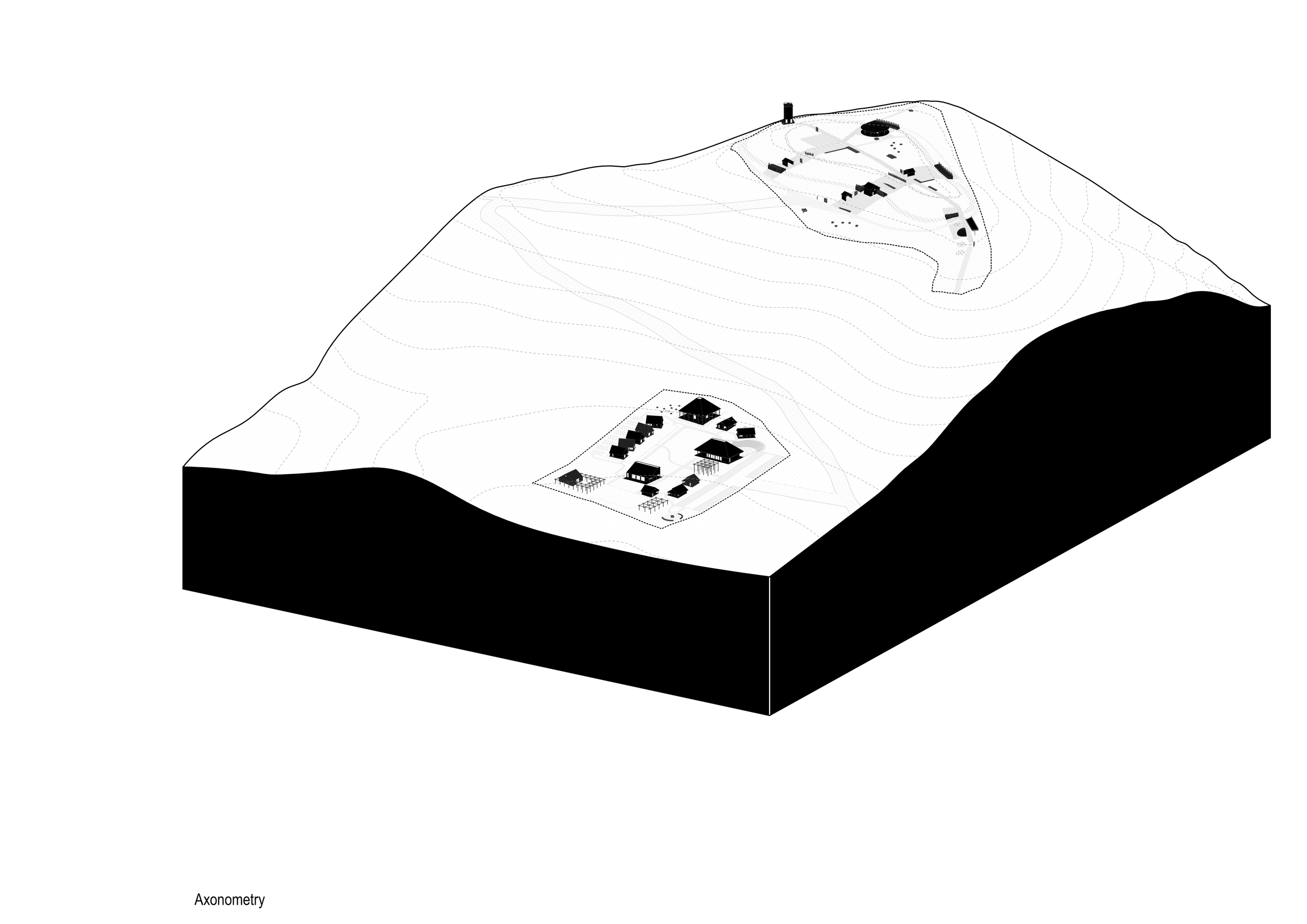
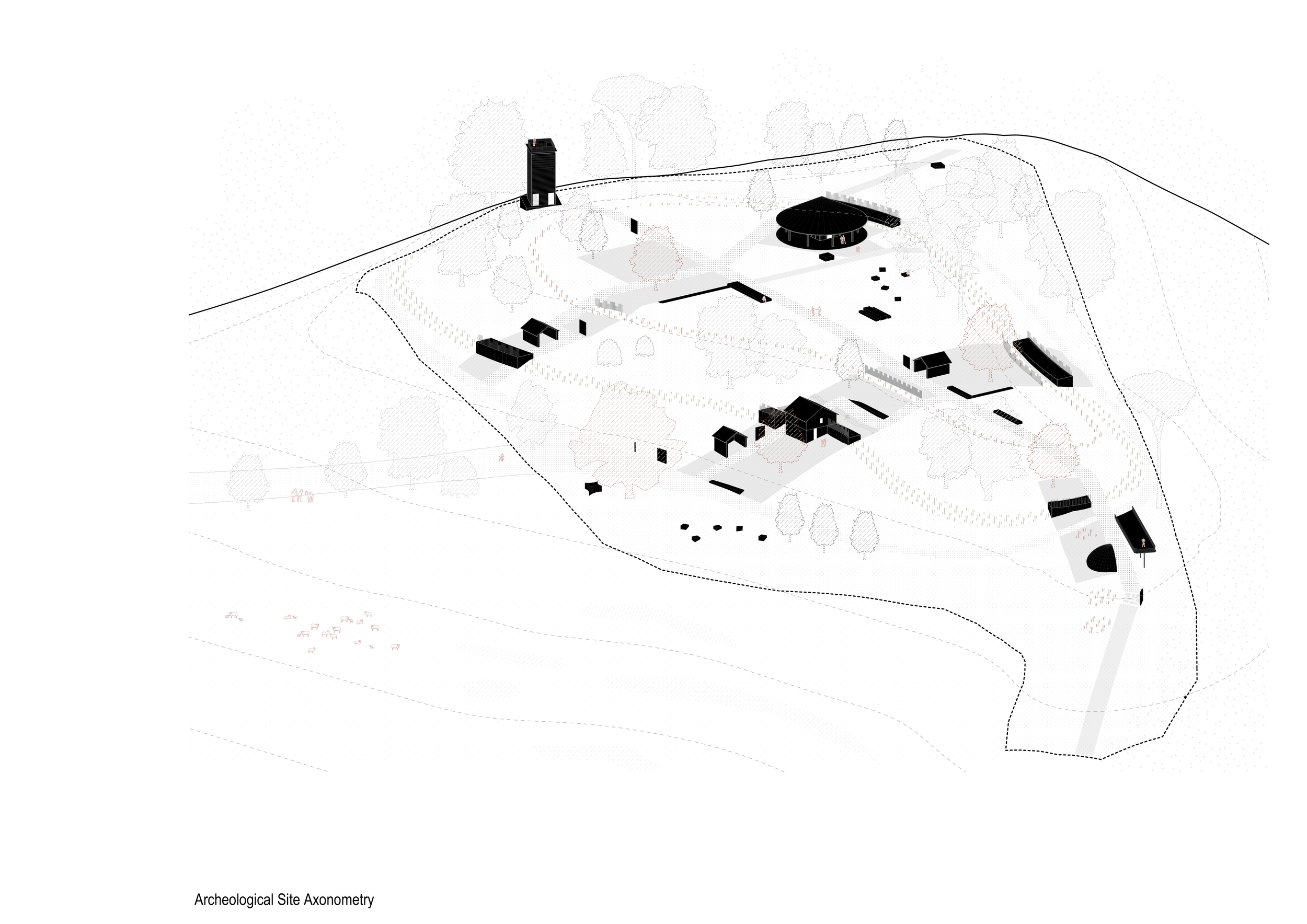
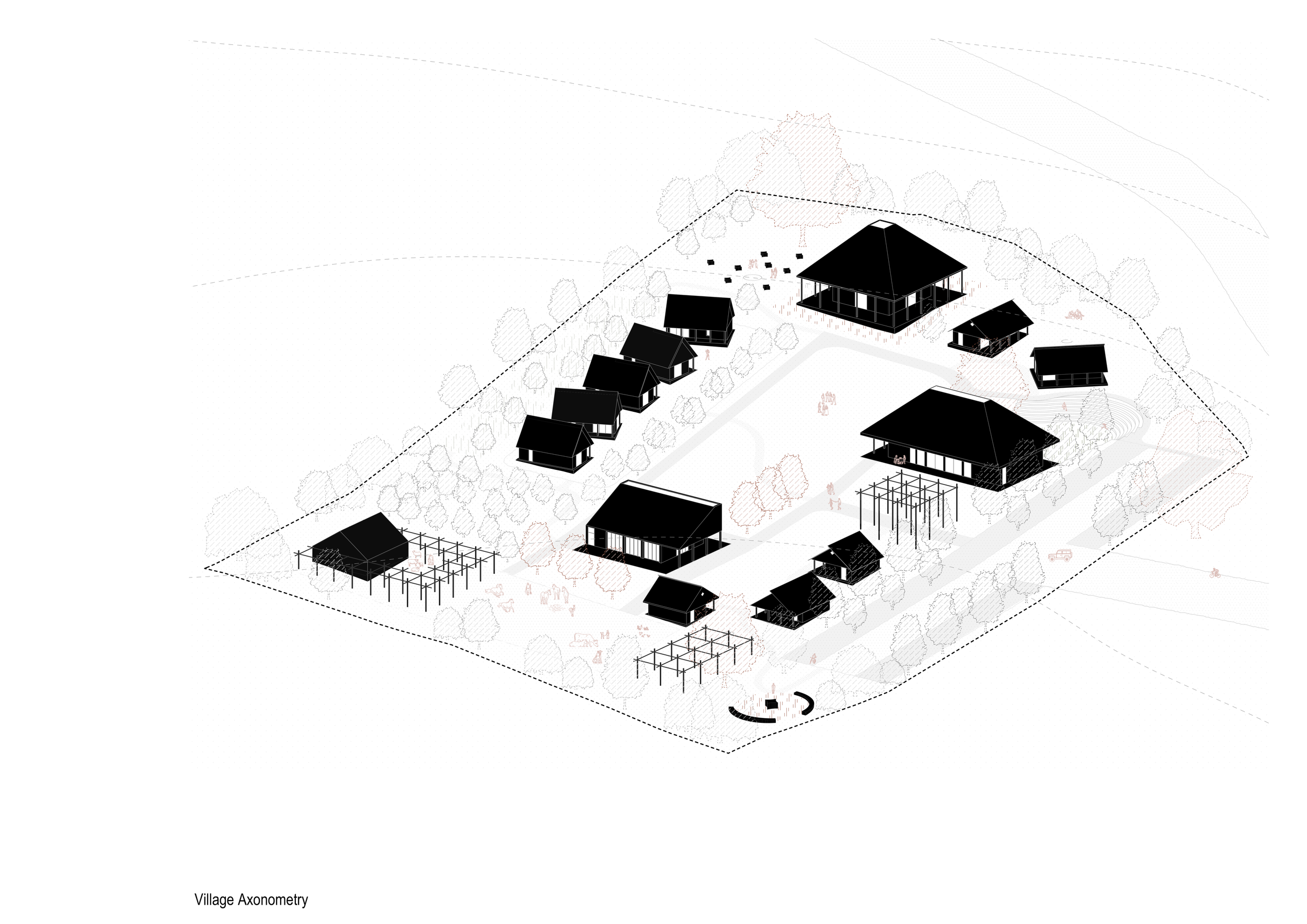
The project aims to enhance the archaeological site at Cugir, registered under LMI code AB-I-s-B-00030 and RAN code 1703.01. The valorisation of the archaeological site involves the creation of hypothetical reconstructions based on archaeological interpretations and fragmentary evidence, conceived in a contemporary architectural language, as well as landscape design interventions, pathways, and pedestrian routes. In addition, the project proposes the inclusion within the built-up area of the land parcel identified by cadastral number 73312 (747), UAT Cugir, intended for the development of facilities associated with the archaeological site, under the overarching theme of a Dacian village.
The design of this thematic settlement draws upon comparable best-practice projects from the European context, as well as specialized literature, such as Introducere în arhitectura dacilor by architect Dinu Antonescu (Editura Tehnică, Bucharest, 1984).
The Dacian fortified settlement of Cugir–Cetățuia is located in Alba County, within the administrative boundaries of the town of Cugir. The archaeological site lies west of the town’s edge, on Cetatea Hill, north of the Valea Dăii stream and south of the Valea Viilor stream. The site is partially forested and contains the remains of a fortified Dacian settlement and a necropolis.
Drawings
Renders